
Red Light Therapy Masks for At-Home Anti-Aging Maintenance
7 min read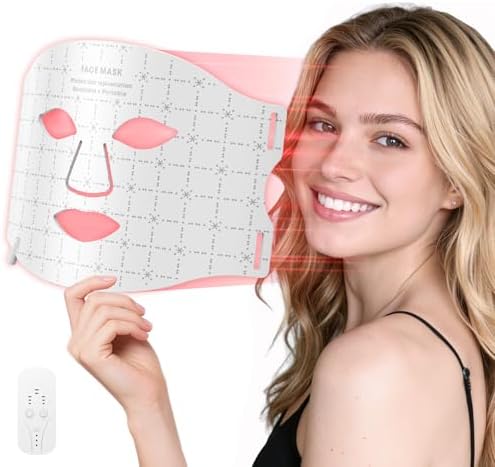
Okay, let’s be real for a second. The skincare aisle is a chaotic mess of promises. Serums that cost more than a tank of gas. Creams that claim to “erase” wrinkles. And then there’s the newest darling of the wellness world: the red light therapy mask. Honestly, a few years ago, this tech was reserved for fancy derm offices and professional athletes. Now? You can strap one on while folding laundry. But does it actually work? Or is it just a glowing piece of plastic that makes you look like a prop from a sci-fi movie?
Well, the short answer is… yes, it works. And no, it’s not magic. Let’s unpack that, shall we?
What Exactly Is Red Light Therapy (and Why Should You Care)?
Red light therapy (RLT) uses specific wavelengths of low-level light — usually in the 630 to 660 nanometer range for red, and near-infrared around 810 to 850 nm — to penetrate the skin. Think of it like photosynthesis, but for your cells. The light energizes the mitochondria, the little powerhouses inside your cells, boosting ATP production. More ATP means more cellular energy. And more energy means your skin can repair itself faster, produce more collagen, and reduce inflammation.
It’s not heat. It’s not UV. It’s just… light. And your skin absolutely loves it. The clinical data is surprisingly robust for something you can buy on Amazon. Studies have shown significant improvements in skin complexion, wrinkle depth, and elasticity with consistent use over 8 to 12 weeks.
The Difference Between Red and Near-Infrared
Here’s the deal — most masks offer both, but they do slightly different jobs. Red light works on the surface, targeting fine lines and surface texture. Near-infrared goes deeper, reaching the dermis and even subcutaneous tissue. That’s where the firming and plumping happens. You want a mask that has both, honestly. If it’s just red light, you’re only getting half the story.
Why At-Home Masks Are a Game Changer (and a Little Weird)
Let’s be honest — wearing a glowing mask makes you look like a cyborg who’s about to upload their consciousness. It’s not glamorous. But the convenience? Unbeatable. No appointments. No co-pays. No awkward small talk with a dermatologist while they poke your face. You just pop it on, set a timer for 10 minutes, and binge an episode of something mindless.
That said, there’s a learning curve. The first time I used mine, I forgot I had it on and answered the door for a package delivery. The delivery guy didn’t flinch, which honestly scared me more. But once you get past the initial “who am I and what have I become” phase, it becomes a ritual. A quiet, red-lit pause in your day.
What to Look For in a Quality Mask (Don’t Skip This)
Not all masks are created equal. Some are glorified nightlights. Here’s what separates the effective from the gimmicky:
- Wavelength accuracy: Look for masks that specify their exact nm range. If it says “broad spectrum” without numbers, run. You want 630-660nm for red and 810-850nm for near-infrared.
- Power density (mW/cm²): This is the wattage per area. Higher is better, but not if it causes discomfort. Aim for at least 20-30 mW/cm². Some pro-grade masks hit 50 or more.
- FDA clearance: This isn’t a “nice to have.” It’s a must. FDA clearance means the device has been tested for safety and efficacy for specific claims. Check the fine print.
- Flexibility and fit: A rigid mask that digs into your cheekbones is a no-go. Look for flexible silicone or contoured plastic that actually conforms to your face shape.
- Timer and auto-off: You don’t want to fall asleep with this thing on. Trust me. A built-in timer is essential.
And one more thing — check the LED count. More LEDs usually mean more coverage, but a mask with 120 well-placed LEDs beats one with 200 scattered randomly. It’s about distribution, not just volume.
How to Use It for Real Results (The Routine)
Here’s where most people mess up. They use it twice, see no change, and toss it in a drawer. But RLT is a cumulative game. You’re not looking for an immediate “wow” — you’re looking for a slow, steady shift. Think of it like brushing your teeth. You don’t brush once and expect a perfect smile forever.
For best results, use it 5 to 7 times per week for the first month. Then you can taper to 3 to 4 times for maintenance. Each session should last about 10 to 15 minutes. Any longer isn’t necessarily better — there’s a bell curve of effectiveness. Overdoing it can actually cause oxidative stress, which is the opposite of what you want.
Morning or Night? The Great Debate
Honestly, it doesn’t matter much. But there’s a nuance. Morning use can help de-puff and energize the skin, giving you a subtle glow for the day. Night use aligns with your body’s natural repair cycle, since that’s when skin cells regenerate most actively. Some people do both — a quick 5-minute session in the AM and a longer one at night. I say pick what sticks. Consistency beats timing perfection every single time.
Pairing RLT with Your Skincare (The Synergy Effect)
This is where things get interesting. Red light therapy doesn’t exist in a vacuum. What you put on your skin before or after matters. The general rule? Light first, actives second. If you apply a vitamin C serum before the mask, the light can degrade it. Same with retinol — it can make your skin more photosensitive, and while RLT isn’t UV, it’s still a light source. Better to be safe.
Here’s a simple flow that works well:
- Cleanse your face thoroughly. No makeup, no sunscreen, no dirt.
- Dry your skin completely. Water can scatter the light and reduce penetration.
- Use the mask for 10-15 minutes.
- Afterwards, apply a hyaluronic acid serum or a peptide moisturizer. The skin is more receptive post-light.
- If it’s morning, finish with sunscreen. Always. No exceptions.
Some people swear by applying a thin layer of hyaluronic acid before the mask, claiming it helps conduct the light. The evidence is anecdotal, but it doesn’t hurt. Experiment a little. Your skin is unique.
Realistic Expectations: What RLT Can and Can’t Do
Let’s manage expectations, because the internet is full of “miracle” before-and-afters that are, shall we say, heavily edited. Red light therapy is excellent for:
- Fine lines and superficial wrinkles — especially around the eyes and mouth.
- Skin texture and tone — it evens out blotchiness and reduces redness.
- Collagen production — which translates to firmer, bouncier skin over time.
- Post-inflammatory hyperpigmentation — it helps fade those stubborn dark spots.
- General “glow” — that lit-from-within look that’s hard to fake.
But it’s not going to fix deep nasolabial folds, sagging jowls, or severe acne scarring. For that, you need in-office treatments like lasers, microneedling, or fillers. RLT is a maintenance tool, not a reconstruction tool. Think of it as the gym membership for your face — it keeps things toned, but it won’t give you a facelift.
The Cost-Benefit Breakdown (Let’s Talk Money)
Sure, a good mask will set you back anywhere from $200 to $600. That’s not pocket change. But compare that to a single session of professional RLT, which runs $50 to $150 per pop. If you go once a week for a year, that’s $2,600 to $7,800. The mask pays for itself in about a month of equivalent sessions. And you own it forever.
| Option | Cost per Session | Annual Cost (1x/week) | Convenience |
|---|---|---|---|
| In-office RLT | $50 – $150 | $2,600 – $7,800 | Low (appointments, travel) |
| At-home mask | ~$0.10 (electricity) | $200 – $600 (one-time) | High (anytime, anywhere) |
The math is pretty one-sided, honestly. And with newer models offering better battery life and more comfortable fits, the barrier to entry keeps dropping.
Potential Downsides (Because Nothing’s Perfect)
I’d be doing you a disservice if I didn’t mention the caveats. First, the time commitment. You have to be consistent for weeks before you see anything. Most people quit around week three, right when results are about to kick in. Second, eye safety. Even though the masks come with protective eye covers or shutoffs, staring directly into red LEDs can be uncomfortable. Always close your eyes or use the provided shields.
Third, and this is a subtle one — the placebo effect is real. But here’s the thing: even if part of the benefit is psychological, the clinical trials back up the biological mechanism. So even if you’re “imagining” the glow, the collagen production is still happening. It’s a win-win.
My Final Take (After Months of Testing)
After using a red light mask for about six months now, I can tell you this: it’s not a dramatic transformation. It’s subtle. But that’s kind of the point. My skin looks calmer. The little creases around my eyes are less pronounced — not gone, but softer. My overall complexion has this evenness that I used to chase with expensive serums and never quite caught.
The ritual itself has become a form of self-care. Those 10 minutes of forced stillness, with a warm red glow on my face, are oddly meditative. It’s a tiny pause in a world that never stops moving. And honestly? That might be